Seeing Spots or Shadows in Your Vision? Understanding E...
Seeing Spots or Shadows in Your Vision? Understanding Eye Floaters and How They Develop
...
August 18, 2026

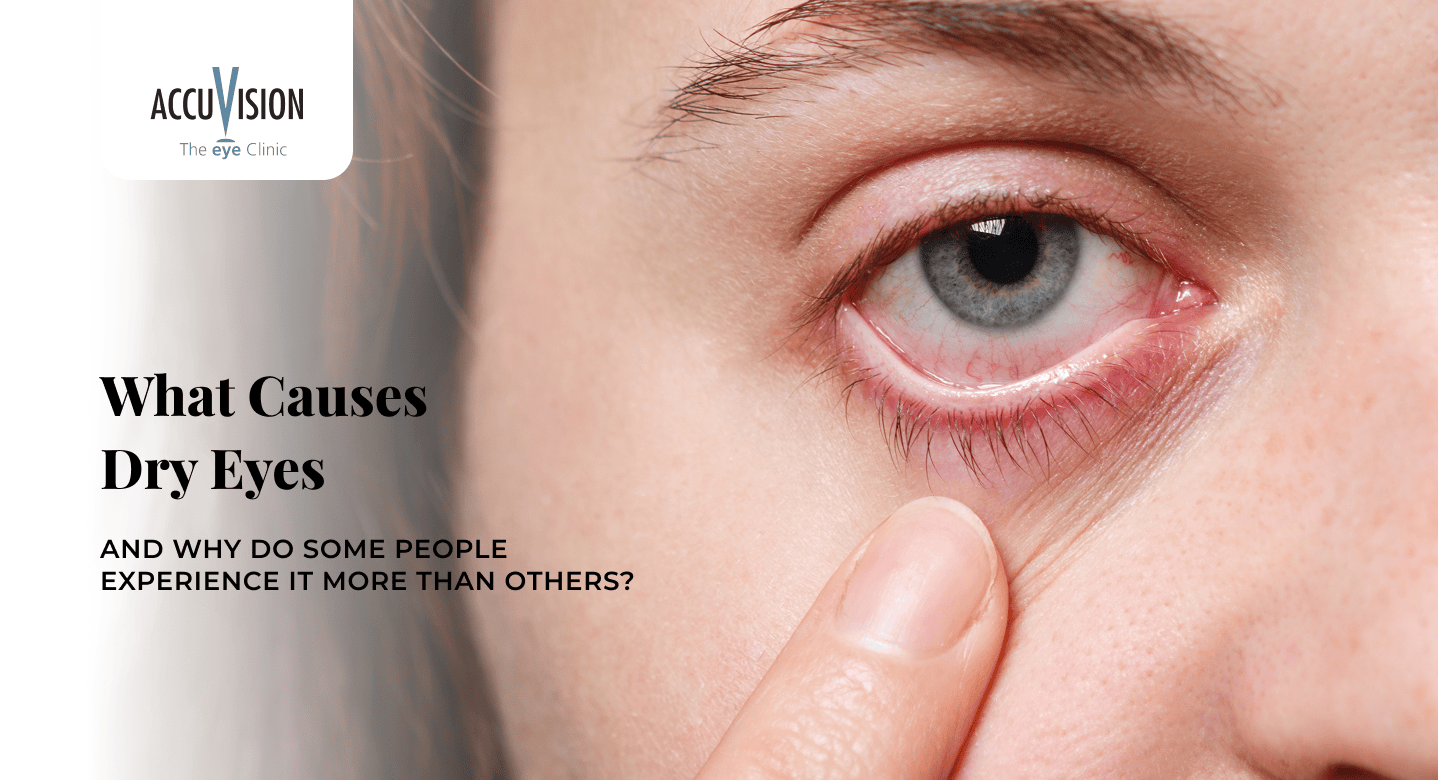
Many of us switch between screens throughout the day, laptops, phones, televisions, tablets or other smart devices and our eyes are continuously glued to one screen or another. Add air conditioning or dry weather conditions to the mix, and this has made eye discomfort and dryness increasingly common in all age groups. Yet here is what puzzles many patients: some people develop persistent dry eye symptoms, while others remain perfectly comfortable. Two colleagues may share the same office, work the same hours, and spend equal time in front of screens, yet one struggles with gritty, burning eyes by mid-afternoon while the other goes about the day without discomfort. This contrast highlights that our eyes are as unique as our fingerprints, and the answer to any eye problem can never be one-size-fits-all.
Understanding what causes dry eyes reveals only part of the picture. The more intriguing question is why identical environmental triggers produce such different outcomes in different people. This blog explores the underlying causes of dry eyes and explains why some individuals are more likely to experience them than others.
Please note: The information provided here is for general educational purposes and does not replace professional medical advice. If you experience persistent dryness or irritation in your eyes, schedule a comprehensive eye examination with an eye specialist at AccuVision to assess your eye health and identify any underlying causes of discomfort.
Tears are not simply water keeping eyes moist. The tear film has three distinct layers working together, and disruption to any one layer can trigger issues.
Two people with the same amount of tear film disruption may still feel different levels of discomfort. The difference comes down to individual variations in baseline tear production, gland density, corneal sensitivity, and how aggressively the immune system responds to irritation. Genetics and overall health largely determine these factors.
Some people still have enough tears even though they blink less, while others develop symptoms within a few hours. There is a lot of variation in baseline tear volume and blink completeness from person to person. Someone who naturally produces abundant tears and blinks fully with each closure has built-in protection that others lack.
Women are almost twice as likely as men to get chronic dry eyes, especially after age 50. Men also experience age-related tear decline, but the process unfolds more gradually. This pattern isn’t random; it’s based on biology:
Tear glands have hormone receptors that respond to levels of oestrogen and androgen. During menopause, declining oestrogen disrupts meibomian gland function, reducing the quality of the protective lipid layer. Lower androgen levels also decrease overall tear production. Women face a double impact that men typically don’t.
Pregnancy and oral contraceptives temporarily alter tear composition through hormonal fluctuations. This situation is another example of individual variation in hormonal sensitivity.
Certain medical conditions represent persistent dry eye disease caused by directly attacking tear-producing glands or altering tear composition.
Many commonly prescribed medications interfere with tear production, which is a frequent yet often unrecognised cause of dry eye syndrome.
While considering the effect of medications on tear production, baseline tear production matters enormously. Someone with naturally abundant tears may tolerate medication-induced reduction without developing symptoms, while someone with marginal production becomes symptomatic with the same dose.
Most people have never heard of meibomian glands, yet the dysfunction of these tiny glands contributes significantly to dry eye cases. The eyelid edges are lined with Meibomian glands, which produce the lipid layer that keeps tears from drying out. When these glands get blocked or make poor-quality oil, tears evaporate quickly, no matter how much aqueous layer the lacrimal (tear producing) glands make.
The severity of meibomian gland dysfunction (MGD) differs among individuals. Genetic factors affect the composition of oil, which makes thicker oils more likely to block gland openings. Some people are born with fewer functional glands while others have abundant. However, habits like spending long hours in front of a screen and not blinking enough can worsen the gland blockage.
Patients often mention that their mother or father had terrible dry eyes, indicating this family history increases their own risk. Genetic factors influence multiple aspects of tear film health, such as tear production capacity, gland density and function, immune response to irritants, corneal sensitivity, and hormonal receptor sensitivity.
These inherited traits create a baseline level of resilience or vulnerability to environmental triggers. Someone with genetically robust tear production and healthy, dense glands can handle situations that would quickly overwhelm someone with genetic weaknesses.
Understanding what causes dry eyes helps address modifiable factors like screen time and air conditioning exposure. However, persistent symptoms require professional evaluation.
Several red flags indicate the need for assessment. Symptoms that persist despite environmental modifications suggest something beyond simple triggers. Progressive worsening indicates an underlying process. See an eye specialist immediately if you experience blurred vision, severe discomfort, or difficulty with daily activities.
Modern diagnostic technology can determine whether symptoms stem from inadequate tear production, excessive evaporation, inflammation, or issues with the glands. This allows for targeted treatment instead of trying different eye drops until one works.
Dry eye syndrome results from intricate interactions between environmental triggers, genetics, hormones, medical conditions, and lifestyle factors. Everyone faces similar environmental challenges, yet susceptibility varies based on these underlying variables.
The colleague who seems immune to dry eyes likely possesses robust tear production, healthy glands, a low inflammatory response, and favorable genetics. Someone struggling in the same environment may have inherited vulnerabilities or hormonal changes compromising their tear film.
Recognizing these individual differences changes how dry eyes are treated. Most people can get long-lasting comfort and protection for their long-term eye health by working with a professional at AccuVision who focuses on specific causes instead of general approaches.
This content was reviewed by the clinical team at AccuVision The Eye Clinic, a trusted UK-based centre for comprehensive laser vision correction and specialised eye care. With expert Ophthalmologists and Optometrists across the UK, AccuVision ensures that every article reflects accurate, medically reviewed information and supports evidence-based eye health awareness. This content is for general educational purposes only and should not be construed as medical advice. Always consult a qualified eye care professional for personalised guidance and treatment of specific conditions.
What causes dry eyes in young people?
Young people typically develop dry eyes due to prolonged screen time, poor contact lens hygiene, or environmental factors, rather than from age-related decline. Most young patients see substantial improvement once they address these factors.
Can allergies make your eyes suddenly dry?
Yes, seasonal allergies cause inflammation that disrupts tear production. Taking certain allergy medications makes your eyes produce even fewer tears. It is important to consult a professional ophthalmologist and give them your accurate medical history.
Do dry eyes mean something is wrong?
Most cases are caused by things in the environment or the way people live, but symptoms that don’t go away can be a sign of autoimmune diseases like Sjögren’s syndrome, thyroid problems, or diabetes. Eye specialists need to evaluate symptoms that worsen over time without a clear cause.
How long does it take for dry eyes to get better?
The timeline is based on the reasons behind the problem. Changes in the environment may help within days, but hormonal or medication-related problems may take weeks. Chronic conditions such as Sjögren’s syndrome or severe MGD need ongoing management.
Can stress or lack of sleep cause dry eyes?
Yes, both stress and poor sleep quality can worsen dry eye symptoms. Stress hormones can affect tear composition, while lack of proper rest reduces tear production and slows eye surface repair. Managing stress and getting enough sleep can significantly improve eye comfort.