Seeing Spots or Shadows in Your Vision? Understanding E...
Seeing Spots or Shadows in Your Vision? Understanding Eye Floaters and How They Develop
...
August 18, 2026

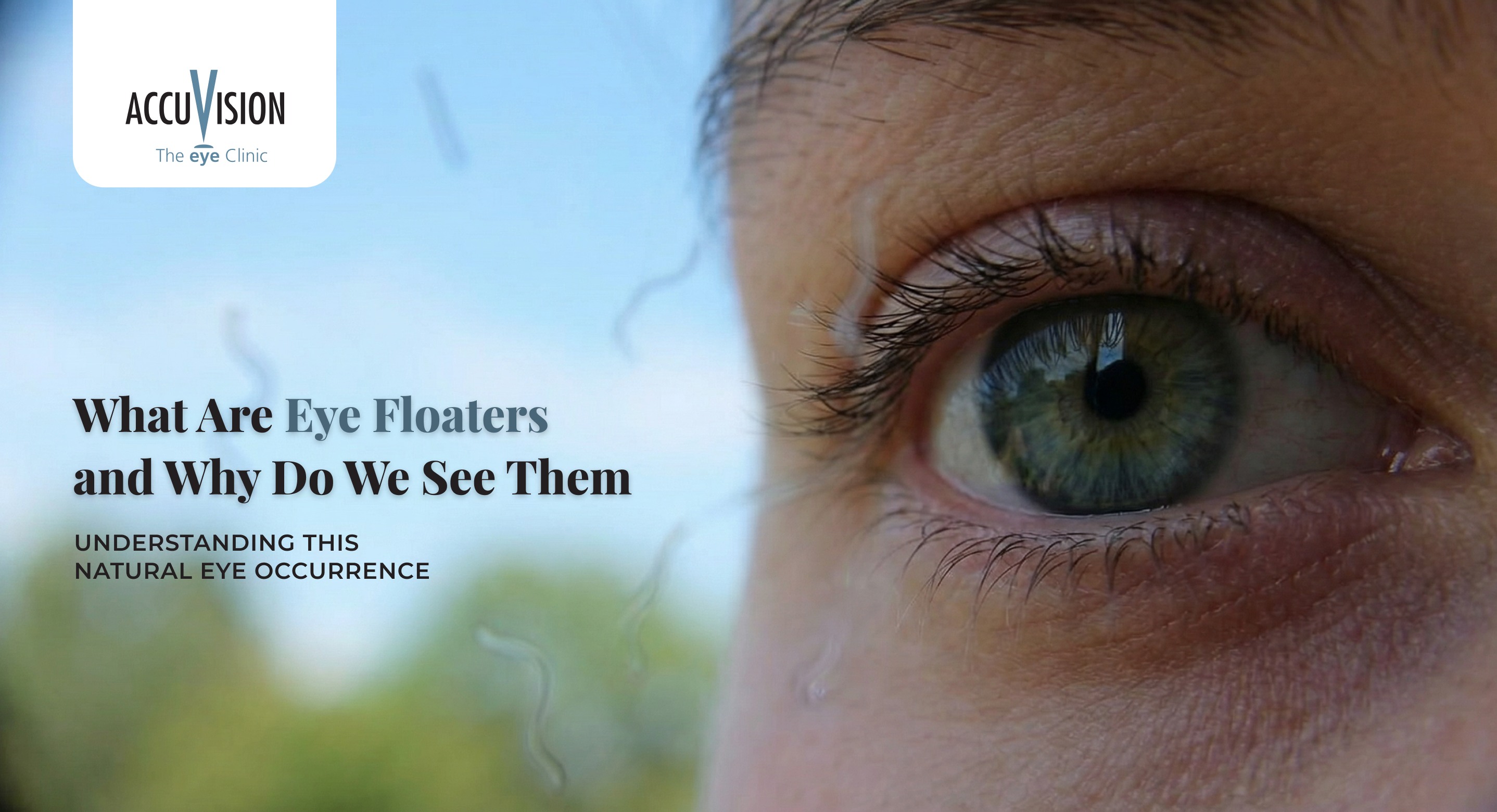
You’re reading on a sunny afternoon when you notice small, shadowy shapes drifting across your vision. They seem to float away when you try to focus on them. Perhaps they appear as tiny dots, squiggly lines, or delicate cobweb-like strands.
If you’ve experienced this, it could be helpful to learn the science behind it. Eye floaters are remarkably common, and while they can be worrying at first notice, they’re usually a harmless part of how our eyes age and function.
That said, it’s completely natural to feel concerned when something changes with your vision. Understanding what floaters are, why they occur, and when they might signal something requiring attention can help you approach them with confidence rather than uncertainty.
This article will explain what floaters in the eye are, explore the reasons we see them, clarify when they’re a normal occurrence, and outline the situations where professional assessment becomes important.
Please note that this content is for educational purposes only and does not replace professional medical advice. If you experience sudden changes in your vision, including new floaters, flashes of light, or vision loss, please seek prompt evaluation from a qualified eye care professional at AccuVision.
Eye floaters are small shapes that appear in your field of vision, often described as spots, threads, or cobwebs. They’re not optical illusions or external objects on the surface of your eye. Rather, floaters exist inside your eye, within the clear, gel-like substance that fills the space between the lens and the retina.
It is helpful to understand the eye’s internal structure to fully grasp what are floaters are. The vitreous is a clear, jelly-like substance that fills approximately 80% of your eye’s volume. In youth, this gel is relatively uniform, clear and firmly attached to the retina. However, as we age, the vitreous gradually changes. Small fibers in the gel can clump together, forming tiny strands or clusters.
These collections cast shadows on the retina, the light-sensitive layer at the back of the eye responsible for converting light into visual signals. The brain interprets these shadows as the floating shapes you see moving through your vision.
Because the vitreous is in constant gentle motion, these shadows shift and drift, creating the characteristic floating appearance. When you move your eyes quickly, the vitreous moves too, causing floaters to swirl and settle slowly back into position.
Patients often talk of a range of symptoms when describing their floaters: some see small dark dots, others notice fine lines or hair-like strands, and some report larger, cloud-like formations. The appearance can differ significantly from person to person, but the underlying cause remains the same.
Floaters are most noticeable when you look at something bright and uniform, such as a clear blue sky, a white wall, or a computer screen. The contrast makes the shadows more apparent, while they may seem to disappear against darker backgrounds.
While age-related changes in the vitreous are the most frequent reason people notice floaters, several other factors can contribute to their development.
It’s important to recognise that floaters don’t necessarily mean there’s an underlying disease. However, understanding their cause and monitoring any changes is essential for protecting your long-term eye health.
Understanding when floaters are harmless and when they require urgent attention is vital to maintaining good eye health. While many floaters are non-concerning, ignoring certain warning signs can lead to serious complications, including permanent vision loss.
Most floaters fall into the category age-related changes. They’re typically nothing to worry about, if:
Many people learn to live with mild floaters. The brain often adapts, filtering them out so they become less noticeable during daily activities.
Certain presentations of floaters indicate the need for immediate professional evaluation. Delaying assessment in these situations can result in irreversible damage to your retina and permanent vision impairment:
These symptoms may indicate conditions such as retinal tears or detachment, which require prompt intervention to preserve vision. If you experience any of these signs, contact an eye care professional without delay. Early treatment can make the difference between saving or losing your sight.
One of the most common questions patients ask is whether floaters will disappear on their own.
The short answer is that many floaters become less noticeable over time, even if they don’t fully vanish. The brain is remarkably adaptable and often learns to ignore these visual disturbances, a process known as neuroadaptation. What seemed intrusive initially may fade into the background of your awareness after weeks or months.
Some floaters do physically settle or move to the periphery of the vitreous, where they’re less likely to interfere with central vision. Others may remain but cease to be bothersome as you become accustomed to them.
Treatment for floaters is rarely necessary. The vast majority of cases require no intervention beyond monitoring. Aggressive treatments carry risks that generally outweigh the inconvenience for most patients.
A conservative, evidence-based approach focuses on reassurance, education, and regular monitoring. If floaters remain stable and aren’t associated with vision-threatening conditions, the best course of action is typically observation rather than intervention. That said, any sudden change or new symptoms should never be dismissed, as they may indicate developing complications requiring immediate medical care.
While most eye floaters are non-concerning, maintaining proactive eye health habits ensures that any changes are identified early.
If you’re ever uncertain whether a symptom warrants attention, seek professional advice without delay. Eye care professionals are equipped to distinguish between normal variations and conditions requiring intervention.
In summary, eye floaters are a common, usually harmless phenomenon arising from natural changes in the vitreous gel. While they can be unsettling when first noticed, most pose no threat to vision. Recognising when floaters are normal and when they signal something more serious empowers you to take appropriate action and maintain lifelong eye health.
This content was reviewed by the clinical team at AccuVision-The Eye Clinic, a trusted UK-based centre for comprehensive laser vision correction and specialised eye care. With expert Ophthalmologists and Optometrists across the UK, AccuVision ensures that every article reflects accurate, medically reviewed information and supports evidence-based eye health awareness. This content is for general educational purposes only and should not be construed as medical advice. Always consult a qualified eye care professional for personalised guidance and treatment for specific conditions.
1. What are floaters in the eye made of?
Eye floaters are small clumps or strands within the vitreous gel of the eye that cast shadows on the retina, making them appear as moving spots or lines in vision.
2. Why do floaters move when I try to look at them?
Floaters move because they are suspended within the vitreous gel and shift as the eye moves, often drifting away when you try to focus on them directly.
3. Are eye floaters a sign of serious eye disease?
Most eye floaters are harmless and related to normal ageing changes. However, a sudden increase in floaters or associated flashes of light should be assessed promptly.
4. Can eye floaters go away on their own?
Many floaters become less noticeable over time as the brain adapts and the particles settle, even though they may not disappear completely.
5. When should I see an eye specialist about floaters?
You should seek an eye assessment if floaters appear suddenly, increase rapidly, are accompanied by flashes of light, or cause changes in vision.
Reference:
Azhdam, A.M., Goldberg, R.A. and Ugradar, S., 2020. In Vivo Measurement of the Human Vitreous Chamber Volume Using Computed Tomography Imaging of 100 Eyes. Translational Vision Science & Technology, 9(1), p.2. doi:10.1167/tvst.9.1.2.