Seeing Spots or Shadows in Your Vision? Understanding E...
Seeing Spots or Shadows in Your Vision? Understanding Eye Floaters and How They Develop
...
August 18, 2026

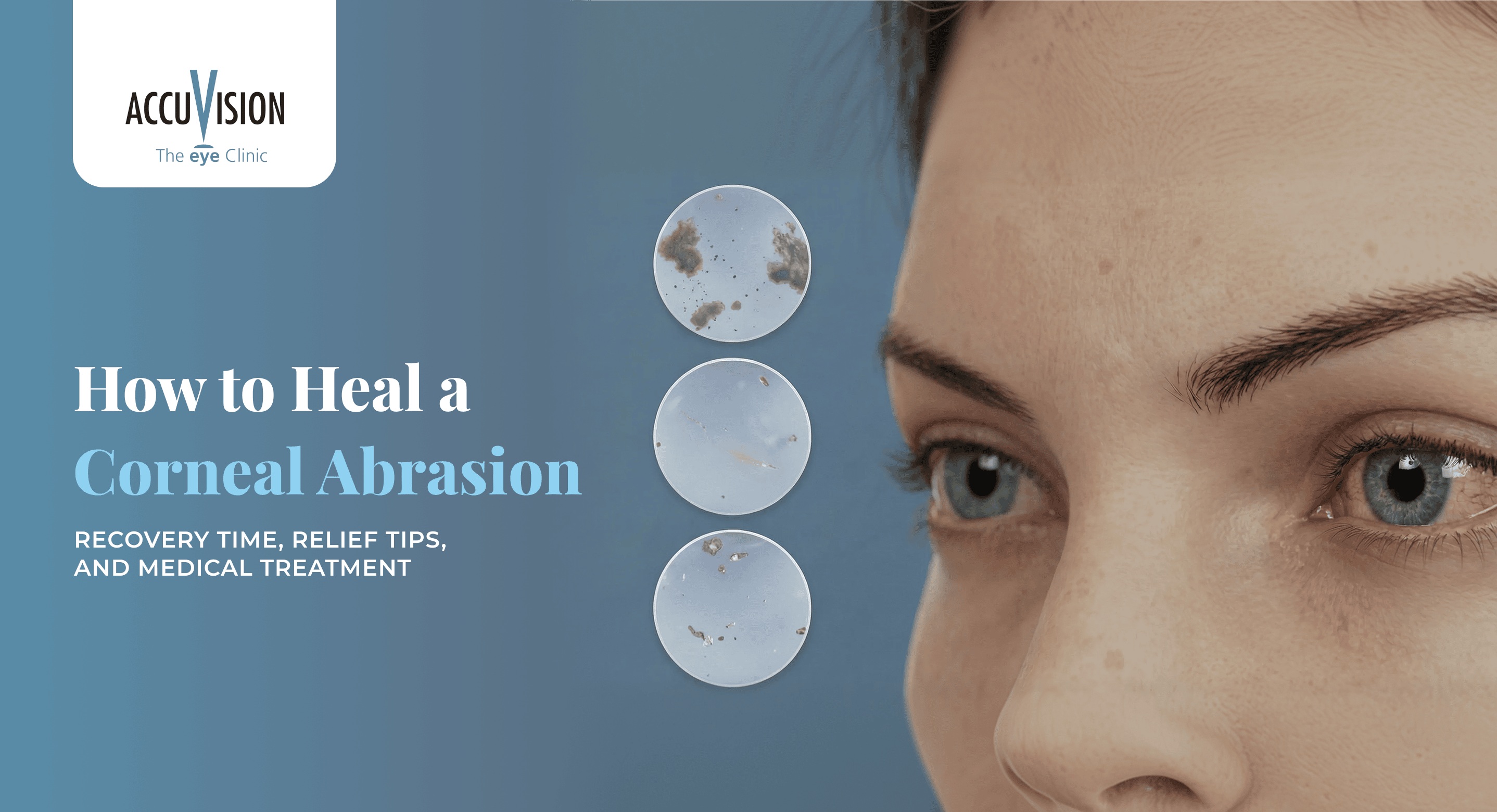
A corneal abrasion is a scratch on the cornea, the clear, protective outer layer at the front of your eye. These injuries are amongst the most common, occurring through everyday activities from an accidental fingernail poke to debris caught under a contact lens.
Even minor eye scratches deserve proper attention. The cornea contains a dense network of nerve endings, explaining why even minor corneal abrasions often cause significant discomfort. Without appropriate care, complications such as infection or recurrent erosion syndrome can develop.
Many corneal abrasions heal well with timely management. Understanding symptoms, knowing when to seek professional care, and following proper treatment protocols ensure optimal recovery and protect long-term eye health.
Medical Disclaimer: This content is for informational purposes only and does not constitute medical advice. It is not intended to replace any professional eye care.
If you are experiencing persistent discomfort, light sensitivity, or blurred vision after an eye injury, a thorough assessment can provide clarity and reassurance. A Consultant-led examination allows careful evaluation of the cornea and guidance on the appropriate next steps for safe recovery.
Corneal abrasions can occur through various everyday circumstances. Understanding common causes helps in both prevention and recognizing when an injury may have occurred.
Recognizing corneal abrasion symptoms enables prompt action. The cornea contains a large number of pain receptors, explaining why even small abrasions can produce marked discomfort.
For minor peripheral abrasions, vision may remain relatively unaffected or return to normal within 24 to 48 hours. However, abrasions on the central cornea can cause vision problems that last for several days. Blurred vision lasting beyond three days, or vision that worsens rather than improves, warrants prompt professional evaluation.
This question naturally concerns anyone experiencing a corneal abrasion. The answer depends on depth, size, cause of injury, and relative factors that may cause complications.
The outer layer of the cornea has a strong ability to repair itself. When a small surface scratch occurs, specialized cells at the edges of the cornea help produce new healthy cells and the surface epithelial layer recovers fairly quickly.
Small, uncomplicated corneal abrasions affecting only the upper layer without deeper damage often heal within 24 to 72 hours, particularly when the basement membrane remains intact.
However, “healing on its own” doesn’t mean ignoring the injury. Proper assessment is essential to determine depth and size of the abrasion and rule out embedded foreign bodies, infection or other inflammatory factors. Infection risk increases significantly with certain causes, particularly contact lens-related injuries. Some scratches may seem to heal on the surface, but the new layer of cells may not attach firmly enough to the tissue underneath. This can make the area more likely to reopen in the future, a condition known as recurrent corneal erosion (RCE).
Factors impairing healing can include diabetes, autoimmune diseases, corneal dystrophies, dry eye disease, continued contact lens wear, and eye rubbing. The responsible approach is seeking professional assessment rather than assuming adequate healing without intervention.
Understanding realistic timelines helps manage expectations and identify when healing isn’t progressing properly.
Recovery is influenced by age, overall health, dry eye disease, and contact lens wear during healing. Patients should expect gradual improvement: pain lessening daily, vision progressively clearing, and redness fading. Any deviation warrants prompt re-evaluation.
Proper clinical management follows evidence-based protocols to maximise healing while minimising complications.
Treatment focuses on helping the eye heal properly, preventing infection, and keeping you comfortable. All treatments should be used only after proper consultation and medical advice from a qualified Optometrist or eye specialist.
Untreated or inadequately treated corneal abrasions can lead to bacterial keratitis, corneal scarring with permanent vision loss, or recurrent erosion syndrome.
Knowing when professional attention is required is crucial for preventing complications and ensuring optimal outcomes.
In RCE, the surface layer of the cornea does not adhere firmly to the underlying tissue, leading to repeated episodes of epithelial disruption with pain, watering, and light sensitivity, often on waking. While many cases respond to lubricating treatment and careful monitoring, persistent or severe episodes may require specialist intervention. In selected cases, Phototherapeutic Keratectomy (PTK) can be used to precipitate a new epithelial layer attaching more securely and reducing the likelihood of further recurrences.
Corneal abrasions are common but should never be dismissed as minor. While many superficial scratches heal within a few days, the discomfort can be significant, and the risk of infection or delayed healing should not be overlooked. Recognising symptoms early and seeking appropriate clinical assessments when needed are important steps in protecting long-term eye health.
If you continue to experience pain, blurred vision, or light sensitivity after an eye injury, a Consultant-led examination can provide reassurance and ensure the cornea is healing as expected.
This content was reviewed by the clinical team at AccuVision-The Eye Clinic, a trusted UK-based center for comprehensive laser vision correction and specialized eye care. With expert Ophthalmologists and Optometrists across the UK, AccuVision ensures that every article reflects accurate, medically reviewed information and supports evidence-based eye health awareness. This content is for general educational purposes only and should not be construed as medical advice. Always consult a qualified eye care professional for personalized guidance and treatment for specific conditions.
1. Can I sleep with a corneal abrasion?
Yes, you can sleep with a corneal abrasion, but symptoms such as discomfort or light sensitivity may feel worse upon waking. In some cases, the healing surface layer can temporarily stick to the eyelid overnight, causing pain in the morning. If symptoms are severe or worsen after sleep, professional assessment is advised.
2. Should I patch my eye if I have a corneal abrasion?
Eye patching is not routinely recommended for most corneal abrasions. Modern corneal abrasion management focuses on lubrication and careful monitoring rather than covering the eye. Patching may delay healing in some cases, particularly in contact lens-related injuries.
3. Can contact lenses cause corneal abrasions?
Yes. Poorly fitted lenses, damaged lenses, or overwear can lead to corneal abrasions. Contact lens-related injuries carry a higher risk of infection, which is why prompt evaluation and appropriate corneal abrasion treatment are especially important for lens wearers.
4. Is a corneal abrasion an emergency?
Not all corneal abrasions are emergencies, but urgent care is needed if there is severe pain, worsening vision, discharge, or a history of chemical exposure or high-velocity injury. Early assessment helps prevent complications and reduces prolonged corneal abrasion recovery time.
5. Can a corneal abrasion cause permanent damage?
Most corneal abrasions heal without long-term effects. However, delayed treatment or infection can lead to scarring, which may affect vision. Proper corneal abrasion management and timely professional care significantly reduce this risk.