Seeing Spots or Shadows in Your Vision? Understanding E...
Seeing Spots or Shadows in Your Vision? Understanding Eye Floaters and How They Develop
...
August 18, 2026
With screens dominating work, travel, and leisure, our eyes are under more strain than ever. Regular eye tests are no longer just about updating prescriptions. They play a vital role in eye care, assessing visual comfort, and identifying early signs of conditions that may not cause obvious symptoms.
It’s common to search for eye test costs, expecting a straightforward answer. Many people find the range of prices confusing, particularly when appointments at different practices seem to vary considerably.
Eye tests are not a single, standardised service. What happens during an appointment can differ significantly between providers, and these differences account for much of the variation in pricing.
Several factors affect the cost of an eye test:
A basic sight test that checks whether glasses are needed differs from a broader eye health assessment. Both serve useful purposes, but they focus on different aspects of vision and eye care.
When comparing prices, it helps to understand what each appointment includes. This clarity allows people to choose an examination that suits their circumstances.
The cost of eye assessments in the UK typically ranges from “free” to around £80, depending on eligibility and the type of examination.
Certain groups can access NHS-funded eye examinations. Eligibility includes children under 16, full-time students aged 16-18, adults aged 60 and over, and people with specific medical conditions or a family history of eye disease.
These appointments cover essential basic vision and eye health checks.
For those arranging private appointments, typical costs include:
| Examination Type | Typical Price Range |
|---|---|
| Basic sight test | £20 – £35 |
| Standard eye examination | £35 – £50 |
| Comprehensive eye health assessment | £50 – £80+ |
The variation in eye test costs reflects what happens during the appointment. Understanding what’s included helps in deciding which examination may be appropriate.
It’s understandable to wonder what actually happens during an eye examination, particularly when prices vary. A comprehensive appointment typically includes several specialized assessments.
Most appointments begin with questions about current vision, lifestyle, general health, and family history. This conversation helps the Optometrist understand individual circumstances and identify any factors that may be relevant to eye health.
This familiar part of the examination measures how clearly each eye can see. Patients read letters or symbols from a chart at a set distance. The test determines whether vision correction is needed and, if so, what prescription strength would be appropriate
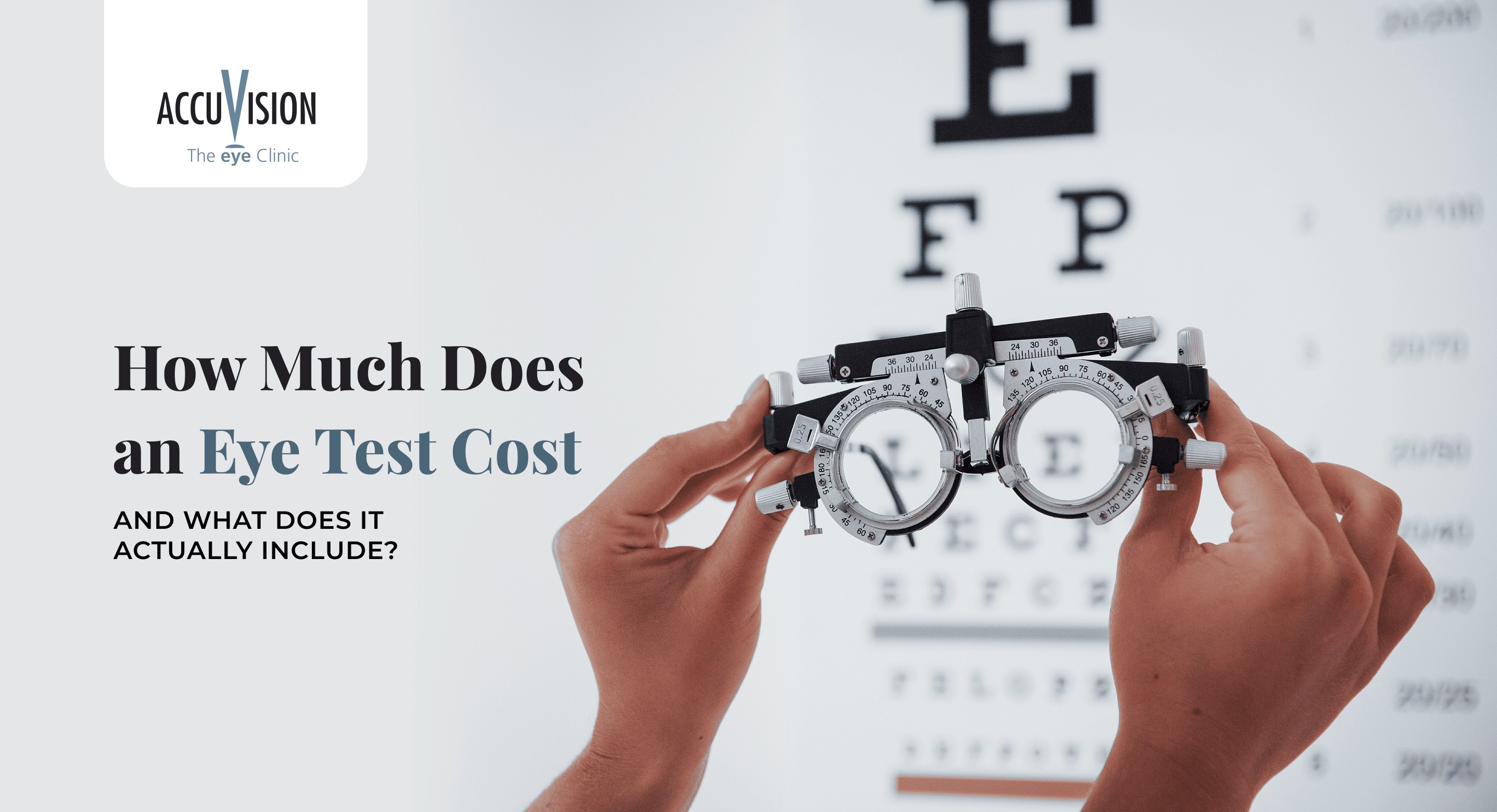
During refraction, the Optometrist uses various lenses to determine the most accurate prescription. This may involve looking through a phoropter (an instrument with multiple lens options) or manual trial frames and lenses while comparing different lens combinations. The process identifies the precise correction needed for clear, comfortable vision. Different subjective and objective techniques may be required depending on the type of prescription or patient history.
These assessments check how well the eyes work together. The Optometrist may ask patients to follow a moving target or cover and uncover each eye in turn. Specialized devices and tests can further investigate binocular vision concerns, muscle weakness or underlying neurological factors driving symptoms such as double vision. These tests usually reveal whether eye muscles are functioning properly and whether both eyes coordinate effectively.
Checking eye pressure is a routine part of most examinations. Elevated pressure can be associated with glaucoma, though pressure alone doesn’t diagnose the condition. The test typically involves a gentle puff of air against the eye’s surface or a small probe that briefly touches the eye after numbing drops are applied. Contact tonometry may be required in certain cases where non contact results are not adequate or need further verification.
The Optometrist checks how pupils respond to light and whether eye movements are smooth and complete. These simple tests can indicate how well the nerves and muscles controlling the eyes are functioning.
Using specialist equipment, the Optometrist examines both external and internal eye structures. This includes:
Some practices incorporate additional technology into their examinations:
Not every appointment includes all these elements and some may include more. The cost of an eye test often reflects how many of these assessments are included, which technologies are used, and how much time is allocated to each component.
Price differences between eye examinations reflect genuine variations in what’s provided during the appointment.
A 15-minute appointment naturally covers less ground than a 30 or 45-minute consultation. Longer appointments allow more time for explanation, questions, and detailed examination of different aspects of eye health.
Modern diagnostic equipment such as retinal cameras and scanning technology represents significant investment. Practices that use these tools typically incorporate the technology into their examination structure and value.
Some appointments concentrate primarily on whether vision correction is needed. Others take a broader view, checking for early signs of conditions that may not yet cause any noticeable symptoms.
Certain eye conditions develop gradually over years. Early awareness of changes and risk factors can be helpful, as it allows monitoring and, where appropriate, timely intervention.
Many practices now offer different examination levels, allowing people to choose an appointment that matches their needs and circumstances.
It’s increasingly common to see practices offering standard and enhanced examinations. A standard appointment typically includes an essential vision and eye health assessment. An enhanced examination may include additional imaging or more extensive screening.
This structure recognizes that people have different needs. Someone young with stable vision and no health concerns may need a different level of examination compared to someone with diabetes or a family history of eye conditions.
When practices are clear about what each examination level includes, it becomes easier to make an informed choice. Some clinics offer comprehensive details about the assessments and technologies included at each price point.
Transparency in this area helps people understand what they’re receiving and why different appointments are priced differently.
Choosing the right eye test depends on your individual eye health needs rather than focusing on price alone. A basic eye test may be sufficient for some people, while others benefit from a more comprehensive examination that looks beyond vision correction.
Choosing Between a Basic and a Comprehensive Eye Test
| A Basic Eye Test May Be Suitable If | A More Comprehensive Eye Test Is Advisable If |
|---|---|
| You are under 40 | You are aged 40 or over |
| Your vision has been stable | You have noticed changes in vision |
| You have no eye discomfort or visual symptoms | You experience headaches or eye strain |
| You have no family history of eye disease | You have a family history of glaucoma, macular degeneration, or other eye conditions |
| You do not have medical conditions and do not take any medications | You have conditions such as diabetes, high blood pressure or dry eyes |
| Your daily visual demands are low | You use screens for long periods or have visually demanding work |
A routine sight test at regular intervals is often adequate when risk factors are low. However, many eye conditions develop gradually and without early symptoms. A more comprehensive eye test can help identify subtle changes early and provide reassurance about long-term eye health.
Understanding what each type of eye test includes allows you to choose an examination that supports both your current vision and future eye health, rather than making a decision based on cost alone.
Whichever examination level seems appropriate, maintaining regular appointments remains important. Many eye conditions develop slowly and without early warning signs
Regular examinations allow Optometrists to track any changes over time, establish baseline measurements, and notice subtle shifts that might indicate developing issues.
The cost of eye test appointments can be viewed as part of ongoing investment in your own health care. Eyes don’t always repair themselves in the way some body tissues can, changes to structures like the optic nerve or retina can be permanent.
Understanding what different examination levels offer helps people make choices that suit their individual circumstances. When the differences between appointment types are clear, it becomes easier to select an examination that provides appropriate care while fitting personal considerations around cost and convenience.
This content was reviewed by the clinical team at AccuVision The Eye Clinic, a trusted UK-based centre for comprehensive laser vision correction and specialised eye care. With expert Ophthalmologists and Optometrists across the UK, AccuVision ensures that every article reflects accurate, medically reviewed information and supports evidence-based eye health awareness. This content is for general educational purposes only and should not be construed as medical advice. Always consult a qualified eye care professional for personalised guidance and treatment for specific conditions.
1. How much does it cost for an eye test in the UK?
The cost of an eye test in the UK ranges from free for eligible NHS patients to around £20–£200 for private appointments, depending on the type of examination and what is included. Referral for appointments with Ophthalmologists can be more expensive and recommended where medical or surgical intervention are needed.
2. What factors affect the cost of an eye test at different clinics?
Eye test costs vary based on appointment length, the level of eye health assessment, and whether advanced diagnostic technology is used.
3. Is a higher cost of an eye test always better?
A higher cost of an eye test often reflects a more detailed examination, but the most suitable option depends on individual eye health needs. Most practices will go through your needs and guide you on what’s best to book in for when you arrange your appointment.
4. Why do the prices of eye tests differ between NHS and private appointments?
Eye test costs differ because NHS examinations follow set criteria with subsidised costs, while private tests may include additional assessments or technology.
5. How can I decide which cost of the eye test UK option is right for me?
The right cost of the eye test UK option depends on your age, eye health history, lifestyle, and any current vision concerns.
NHS (2025) Free NHS eye tests and optical vouchers. NHS. Available at: https://www.nhs.uk/nhs-services/opticians/free-nhs-eye-tests-and-optical-vouchers/ (Accessed: 6 January 2026).