Seeing Spots or Shadows in Your Vision? Understanding E...
Seeing Spots or Shadows in Your Vision? Understanding Eye Floaters and How They Develop
...
August 18, 2026

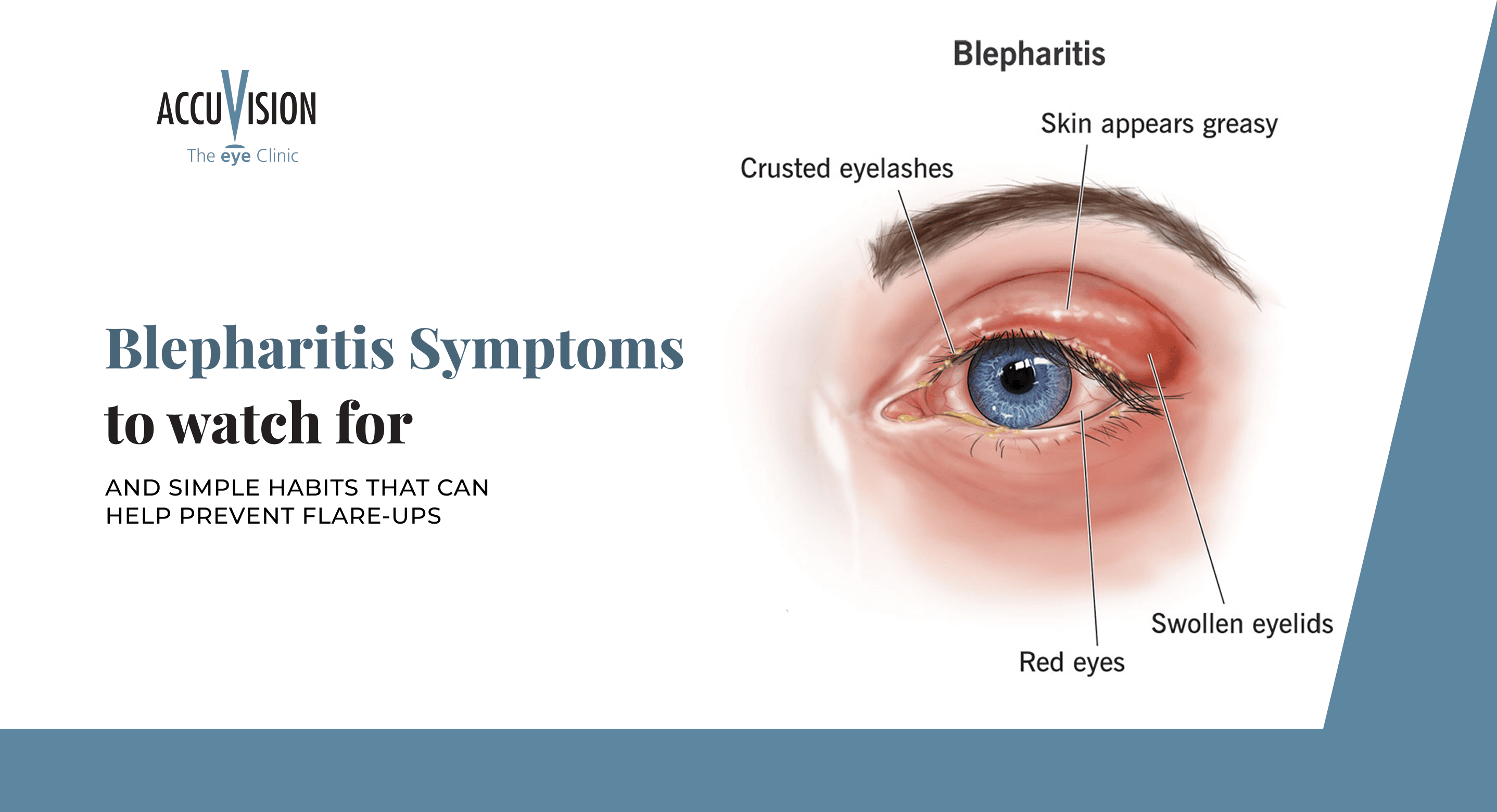
Blepharitis is one of the most common eyelid conditions affecting people of all ages, yet its symptoms are frequently mistaken for temporary eye irritation or fatigue. This chronic inflammation of the eyelid margins tends to follow a pattern of flare-ups and periods of relief, making early recognition particularly valuable.
Understanding the signs and symptoms of blepharitis helps you distinguish between occasional eye discomfort and a condition that may benefit from consistent management. This guide discusses the key blepharitis symptoms to watch for and shares practical daily habits that can help reduce the frequency and severity of flare-ups.
Please note that this content serves educational purposes only and does not replace professional medical advice. For persistent symptoms, we recommend booking a comprehensive eye examination at AccuVision.
Blepharitis involves inflammation along the margins of your eyelids, where your eyelashes originate. This area contains tiny oil glands (meibomian glands) that produce the oily layer of your tear film, which helps prevent tears from evaporating too quickly.
When these glands become blocked or inflamed, it disrupts your tear film stability and creates an environment where bacteria and inflammatory debris can accumulate. This is why blepharitis flare-up symptoms tend to recur, particularly during periods of stress, environmental changes, or when eyelid hygiene routines lapse.
Despite the condition’s chronic nature, consistent maintenance of preventive habits often leads to the return of symptoms.
Recognising blepharitis symptoms early allows prompt management and prevents progressive flare-ups. Here are the key signs to watch for.
The edges of your eyelids may appear noticeably red or swollen, particularly in the morning. This redness often extends along the lash line and may feel warm or tender to touch.
You might notice small scales or crusty debris clinging to your eyelashes, similar in appearance to dandruff. These flakes can be white, yellow, or slightly greasy in texture.
Many people with blepharitis find their eyelids stuck together or coated with a sticky discharge when they first wake up. This occurs because inflammatory debris accumulates overnight
A recurring urge to rub or scratch your eyelids is one of the characteristic symptoms of blepharitis. This itching tends to worsen during flare-ups and may become more intense in the evening.
Your eyelids or the surface of your eyes may feel as though they’re burning, particularly after blinking or when exposed to wind or air conditioning.
This uncomfortable sensation, as though something is lodged in your eye, occurs because of tear film instability and inflammation affecting the ocular surface.
Blepharitis and dry eye symptoms are closely linked, as the condition disrupts the oil layer that normally keeps tears from evaporating. This results in eyes that feel persistently dry despite producing tears
It seems contradictory, but many people with dry eye or blepharitis symptoms experience excessive tearing. This happens because your eyes produce reflex tears in response to surface irritation, though these tears lack the proper composition to improve the eye’s surface effectively.
Unstable tear film can cause temporary blurring that clears when you blink. This fluctuating vision is particularly noticeable during reading or screen use.
Photophobia, or light sensitivity, can accompany blepharitis flare-ups. Bright lights or sunlight may feel uncomfortable, causing you to squint more than usual. Photosensitivity can have more concerning underlying causes that require medical intervention, so it is best to always have this investigated
Perhaps the most characteristic feature of blepharitis is its cyclical nature. You may experience periods where symptoms intensify, followed by stretches of relative comfort while maintaining good eyelid hygiene.
Not everyone experiences blepharitis symptoms in the exact same way. Some people notice that if there is an allergic component to the ocular surface disease, symptoms become more pronounced during certain seasons or after exposure to specific triggers such as pollen, dust, or particular cosmetic or skincare products.
Others may experience angular blepharitis symptoms, where discomfort concentrates at the corners of the eyes where the upper and lower lids meet. This variant can cause particular irritation and may be associated with nutritional factors or skin conditions.
The connection between blepharitis and dry eye is particularly significant. When the oil glands in your eyelids aren’t functioning properly, the resulting tear film instability intensifies both dryness and general eye discomfort.
Here’s how symptom patterns can differ:
| Symptom pattern | Possible contributing factor | Key characteristics |
|---|---|---|
| Intense itching and redness | Allergic triggers | Symptoms may worsen seasonally or after exposure to cosmetics, pollen, dust, or other environmental allergens |
| Discomfort at the eye corners | Angular involvement | Irritation is concentrated at the corners of the eyes, where the upper and lower eyelids meet. |
| Severe dryness and fluctuating vision | Significant dry eye component | Symptoms often worsen during prolonged screen use or in dry, air-conditioned, or heated environments. |
While blepharitis is a chronic condition, consistent daily habits can significantly reduce the frequency and severity of flare-ups. These practical measures focus on maintaining eyelid health and creating an environment less prone to inflammation.
Gently cleansing your eyelids each day helps remove debris, excess oils, and bacteria that contribute to inflammation. Use water or an eyelid cleanser as advised by your eye specialist, wiping along the lash line with your eyes closed. This simple practice, performed morning and evening, forms the foundation of blepharitis management.
Warmth helps soften blocked oil in the meibomian glands, allowing them to function more effectively. Apply a clean flannel made warm with hot water (around 45ºC) to your closed eyelid margins for 5 minutes with massage, once or twice daily, as guided by your practitioner.
Though itching can be intense during flare-ups, rubbing introduces bacteria and can worsen inflammation. If you must touch your eyes, ensure your hands are thoroughly washed first.
Extended screen use reduces your blink rate, which compounds dry eye symptoms associated with blepharitis. Take regular breaks using the 20-20-20 rule: every 20 minutes, look at something 20 feet away for 20 seconds. Make a conscious effort to blink fully and frequently.
If you wear eye makeup, choose products labelled as hypoallergenic and remove them completely before any eyelid cleansing routine. Avoid applying eyeliner to the inner rim of your eyelids, as this can block oil glands.
Where possible, minimise exposure to smoking, strong winds, and dry environments. A bedroom humidifier can help if you wake with particularly sticky or uncomfortable eyelids.
For persistent cases, prompt medical attention is recommended; your eye specialist will guide you through the accurate assessment and treatment options.
Most people may manage mild blepharitis symptoms effectively with healthy daily habits. However, certain situations warrant professional review. Seek evaluation if your symptoms:
A comprehensive eye examination allows your Optometrist or Ophthalmologist to assess the severity of your blepharitis, check for associated conditions and underlying triggers, and recommend targeted treatments tailored to your particular symptom pattern and clinical signs.
You can effectively manage blepharitis symptoms with the right approach. Recognising the signs early, from morning crusting and eyelid redness to the gritty sensation and fluctuating vision, enables you to take action before flare-ups become severe.
The key to long-term comfort lies in consistency. Daily eyelid hygiene, warm compresses, and mindful habits around screen use and eye makeup can create an environment that inhibits inflammation and promotes eyelid health.
Professional guidance can help identify the most effective management strategy for your individual needs if you’re experiencing persistent eyelid discomfort or recurring symptoms.
This content was reviewed by the clinical team at AccuVision The Eye Clinic, a trusted UK-based centre for comprehensive laser vision correction and specialised eye care. With expert Ophthalmologists and Optometrists across the UK, AccuVision ensures that every article reflects accurate, medically reviewed information and supports evidence-based eye health awareness. This content is for general educational purposes only and should not be construed as medical advice. Always consult a qualified eye care professional for personalised guidance and treatment for specific conditions.
1. What are the most common blepharitis symptoms?
Common blepharitis symptoms include red or inflamed eyelid margins, itching around the lashes, crusting, a gritty eye sensation, dryness, or watery eyes. Symptoms often worsen during flare-ups and improve with consistent care.
2. How do blepharitis dry eye symptoms differ from regular dry eye?
Blepharitis has a strong correlation with dry eye. Symptoms usually fluctuate and may include burning, watering, or blurred vision that improves with blinking, caused by eyelid inflammation affecting tear stability.
3. What are blepharitis flare-up symptoms?
Blepharitis flare-up symptoms involve a temporary increase in redness of the eye lids, itching, crusting, and irritation, often worsened by stress, screen use, or lapses in eyelid hygiene.
4. Are allergic blepharitis symptoms different?
Allergic blepharitis symptoms tend to cause more intense itching and redness and may worsen seasonally or after exposure to allergens or cosmetic products.
5. When should symptoms of blepharitis be professionally evaluated?
Symptoms of blepharitis should be evaluated if they persist despite daily care, recur frequently, or begin to affect vision or overall eye comfort.